Vape warranty: what is covered and what never is
Every listing mentions cover of some kind, which is reassuring right up to the moment something stops working. A vape warranty in the United Kingdom is really two separate things stacked on top of each other, and confusing them is why so many claims go nowhere. There are the rights the law gives you against the shop that sold the device, and there is whatever policy that shop chooses to publish on top. On a site about mixing your own bottles, the boundary matters more than usual, because some of what we describe sits squarely on the wrong side of it.
What a vape warranty covers in the UK
Two layers apply, and they are not the same instrument. The first is statutory. Under British consumer law, goods sold by a trader to a consumer must be of satisfactory quality, fit for purpose and as described, and that duty sits with the retailer rather than with the manufacturer.
That gives you a short window to reject faulty goods outright after purchase, and a longer period during which a fault that appears is presumed to have been there from the start unless the retailer can show otherwise. After that presumption lapses, the burden of proof moves to you, which is the practical turning point.
The second layer is the retailer or manufacturer policy, and this is what shop pages usually mean by warranty. Across British vape retailers, six months from purchase on kits, mods and devices is the common published figure, with some running shorter windows on built in battery devices.
Those policies sit alongside your statutory rights rather than replacing them. A short published warranty does not remove what the law gives you, though in practice most disputes are settled against the published policy because it is simpler for both sides.
The exclusions nobody puts in the headline
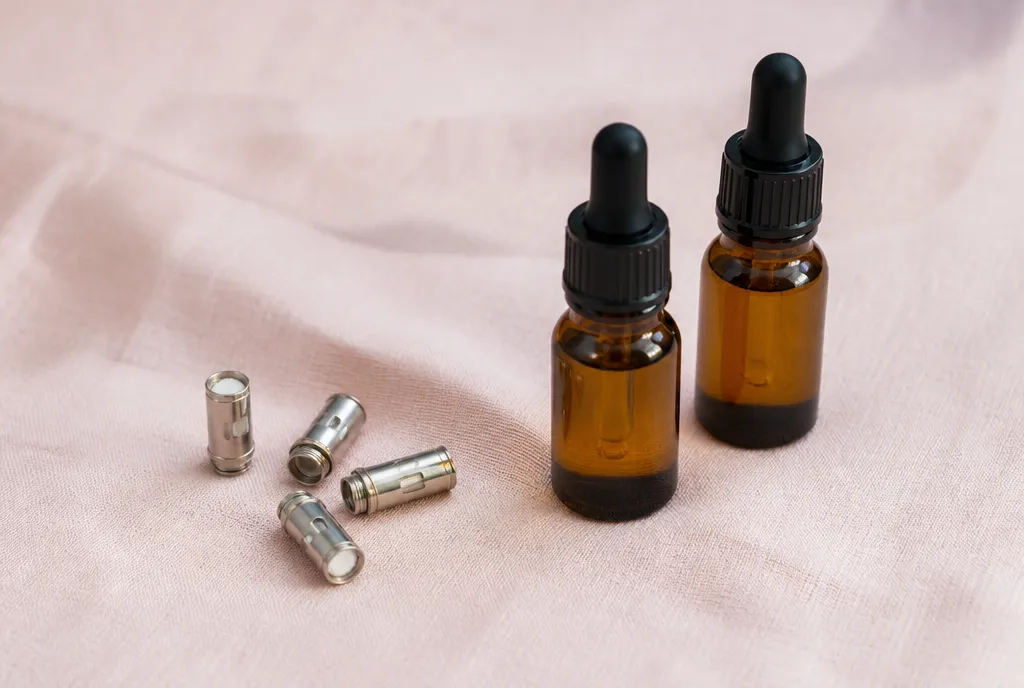
The first blind spot is the consumable. Coils, pods, cartridges, e-liquid and disposable devices are consumed in normal use, so a coil that fades after a few weeks is behaving as designed rather than failing.
British retailers state this openly once you read past the front page. Sealed consumables are typically covered only by a short dead on arrival window, sometimes as little as forty eight hours, and not by the device warranty at all.
The second blind spot is unsuitable use. A device that has been dropped, immersed, opened up, or charged from an unsuitable supply falls outside the cover. The wording in the policies is broad, and the interpretation applied to it is not.
Batteries are their own category again. Cells and built in batteries have a finite working life by design, and gradual capacity loss is wear rather than a defect. Several British retailers spell that out specifically because it is such a frequent source of claims.
Why a vape warranty and home mixing do not mix
The third exclusion is the one this site has to be blunt about: any modification to the product. That is not a technicality, it is the clause that closes the file.
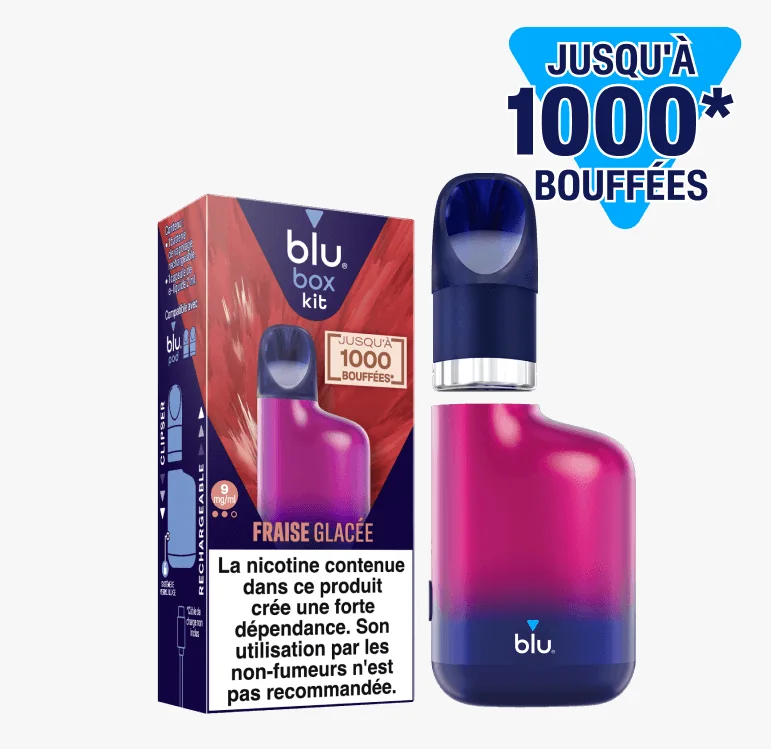
A sealed pod or a prefilled cartridge is engineered as a single unit. The coil, the wicking and the liquid inside it are matched to each other, and the whole assembly was designed around one specific formulation.
Refilling it with a base of your own, whose PG and VG proportions bear no relation to the original, means running that heating element outside the conditions it was built for. The outcome ranges from a burnt taste to a cartridge that will not work at all, and no vape warranty will look at it afterwards.
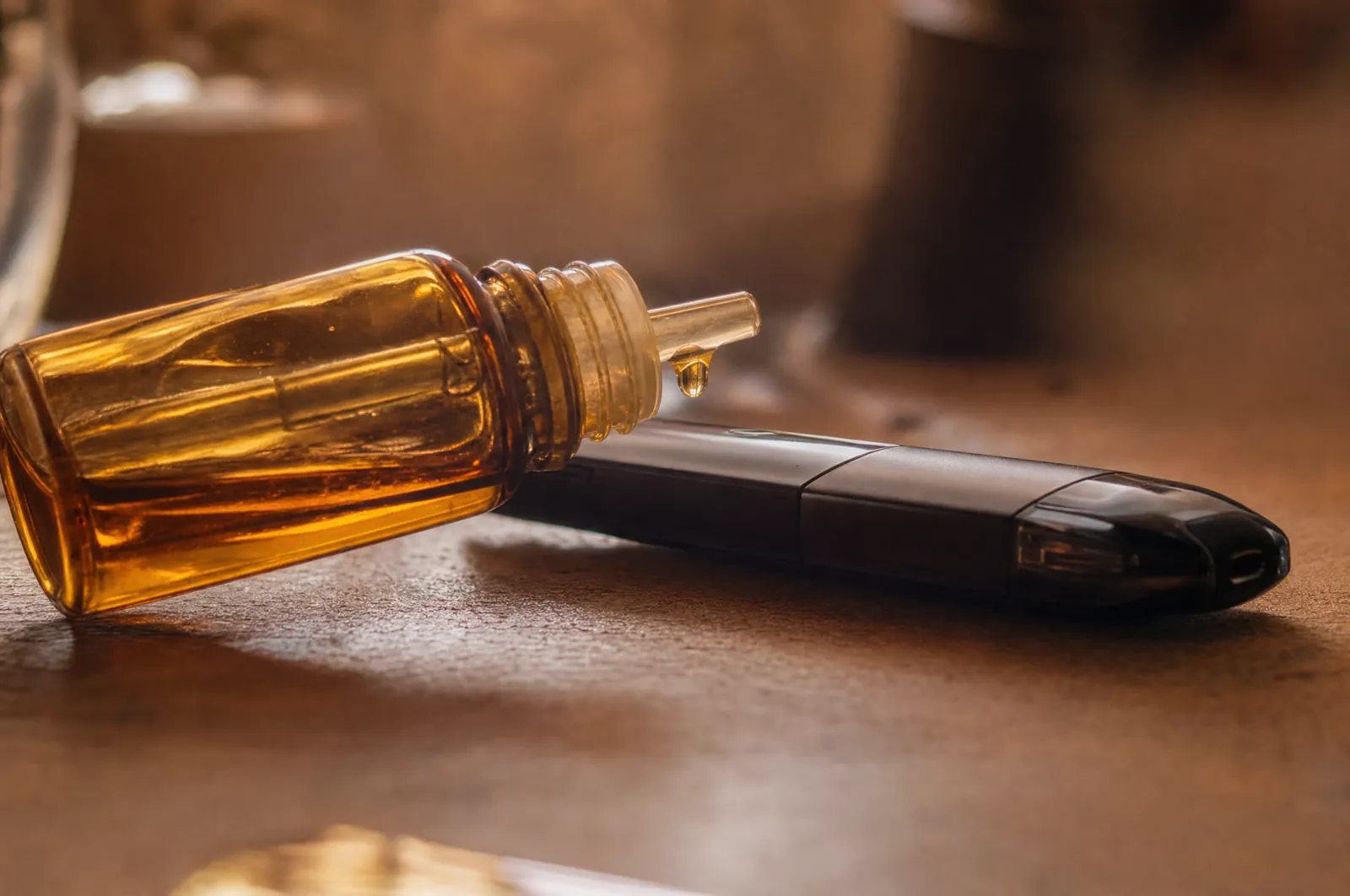
Home mixing has a proper place, and that place is an open system with a refillable tank and replaceable coils. That is where our nicotine shot guide and the calculation pages apply. On a closed system, the same practice buys you a broken device with no recourse.
The same logic covers concentrated nicotine itself. Wear gloves when pouring, keep bottles out of reach of children and animals, store them away from light, and never bring any of it near a device that was not designed to be refilled.
Where you bought it decides what you can do
At identical cover on paper, the shop matters more than the badge on the device. That is the part most people work out only after something breaks.
Buying direct from a manufacturer gives you a single point of contact. There is nobody to pass you along to, and the terms you agreed to are the terms that apply.
Buying from a third party retailer lengthens the chain, and it also means the retailer is who you deal with rather than the maker. That is actually to your advantage under British law, since your statutory rights run against the seller, but it does mean the retailer may need to refer the fault upstream before resolving it.
Marketplace purchases are the awkward case. When the seller is an overseas trader operating through a platform, enforcing anything becomes considerably harder, whatever the listing promised. Keep the proof of purchase in every case, because no claim of any kind survives without it.
The false faults worth ruling out first
A good share of warranty claims concern situations that resolve in under a minute, and it is worth working through them before writing to anybody.
A flashing indicator most often signals a pod or cartridge that is not seated correctly. A device that refuses to fire may simply be in the safety lock that most modern hardware enables through a series of button presses.
Contacts covered in condensation or leaked liquid are another regular culprit, and a cotton bud usually settles it. So does a charging cable that has been carried loose in a bag for six months.
And a draw that has turned unpleasant is almost never a hardware fault at all. That belongs to the liquid and the settings, as our page on a harsh throat hit sets out in detail.
What to check on the listing before ordering
Four things, and they take about a minute to verify. The published warranty period on the device itself, stated separately from anything said about consumables.
Whether the seller is identifiable, with a real address and a contact route that is not only a web form. An explicit returns policy, including the window and who pays for return postage.
And a clear statement of what the retailer treats as a consumable, since that single distinction decides most disputes before they begin.
None of that turns a poor device into a good one. It does decide what you will be able to argue on the day something stops working, which is the only moment a vape warranty is worth anything at all.
Frequently asked questions
How long is a vape device covered in the UK?
Retailer policies commonly run to six months on kits and mods, sometimes less on built in battery devices. Separately, statutory rights against the seller run well beyond that, though the burden of proving a fault was present from the start shifts to you after an initial period.
Are coils and pods covered?
Generally not. They are consumables, consumed by normal use, and are usually covered only by a short dead on arrival window rather than by the device warranty. Fading flavour and reduced output are expected behaviour, not defects.
Does refilling a sealed pod void the warranty?
Yes. It is a modification of the product, which puts it outside the cover in essentially every published policy. It also runs the heating element outside its intended conditions, so the practical risk is real as well as the contractual one.
Is a disposable device covered by anything?
Only by a very short dead on arrival window at most retailers, since it is a sealed consumable sold complete. Once it has been used, there is normally nothing to claim against.
Do I need the receipt?
Yes, in practice always. Proof of purchase establishes both the date and the seller, and without it neither a published policy nor a statutory claim gets very far.
Knowing the boundary before you need it
A vape warranty is not a single promise, it is a boundary line, and everything useful sits in knowing exactly where that line runs. Devices on one side, consumables on the other, and anything you have modified yourself well outside it.
That last point is the one to hold onto here. Mixing your own bottles is a perfectly ordinary practice on hardware designed to be refilled, and it is incompatible with a sealed system by construction rather than by policy. Choosing the right hardware first is what keeps both options open.
Check the published period, identify the seller, keep the receipt, and know which parts of your kit the shop treats as consumable. Those four habits decide what a vape warranty is actually worth to you, and the rest of the benchmarks section covers the other reference points the listings leave out.
Editorial content for adult readers only. Nicotine is a highly addictive substance. Not for sale to under-18s in the United Kingdom. This article is not a buying recommendation and is not legal advice.