Heisenberg e-liquid: mixing and strength explained
Few recipes hold their place on British shelves for as long as this one has. Heisenberg e-liquid, made by Vampire Vape, has been in every conversation about vaping since it launched, and almost every page written about it describes the taste. Far fewer explain what happens when you buy a large nicotine free bottle and pour the shots in yourself. On a site about mixing, that is the interesting half, because this particular recipe does not behave like a dessert flavour when you dilute it.
What the maker says, and what it does not
Start with the part every source agrees on. Heisenberg is a Vampire Vape creation, from a British manufacturer, and the name nods at the Walter White character from Breaking Bad. The reference is deliberate and runs through the range imagery.
On the composition, honesty is the only option. Vampire Vape does not publish the recipe and presents it as a secret, which is as much part of the brand identity as the artwork. Any page listing the exact flavourings is inventing them or paraphrasing a retailer.
What British retailers describe consistently is a flavour family rather than a formula: mixed berries, a pronounced icy menthol, and a quieter note several tasters place near aniseed. Vampire Vape itself describes it as a cool blue fruit with icy menthol and subtle aniseed.
So take a profile, not a recipe. Fruit, strong cold, and a lateral signature that is hard to name. That construction is exactly the kind that reacts sharply to dilution, which is what makes it worth writing about here.
The formats of Heisenberg e-liquid and what they imply
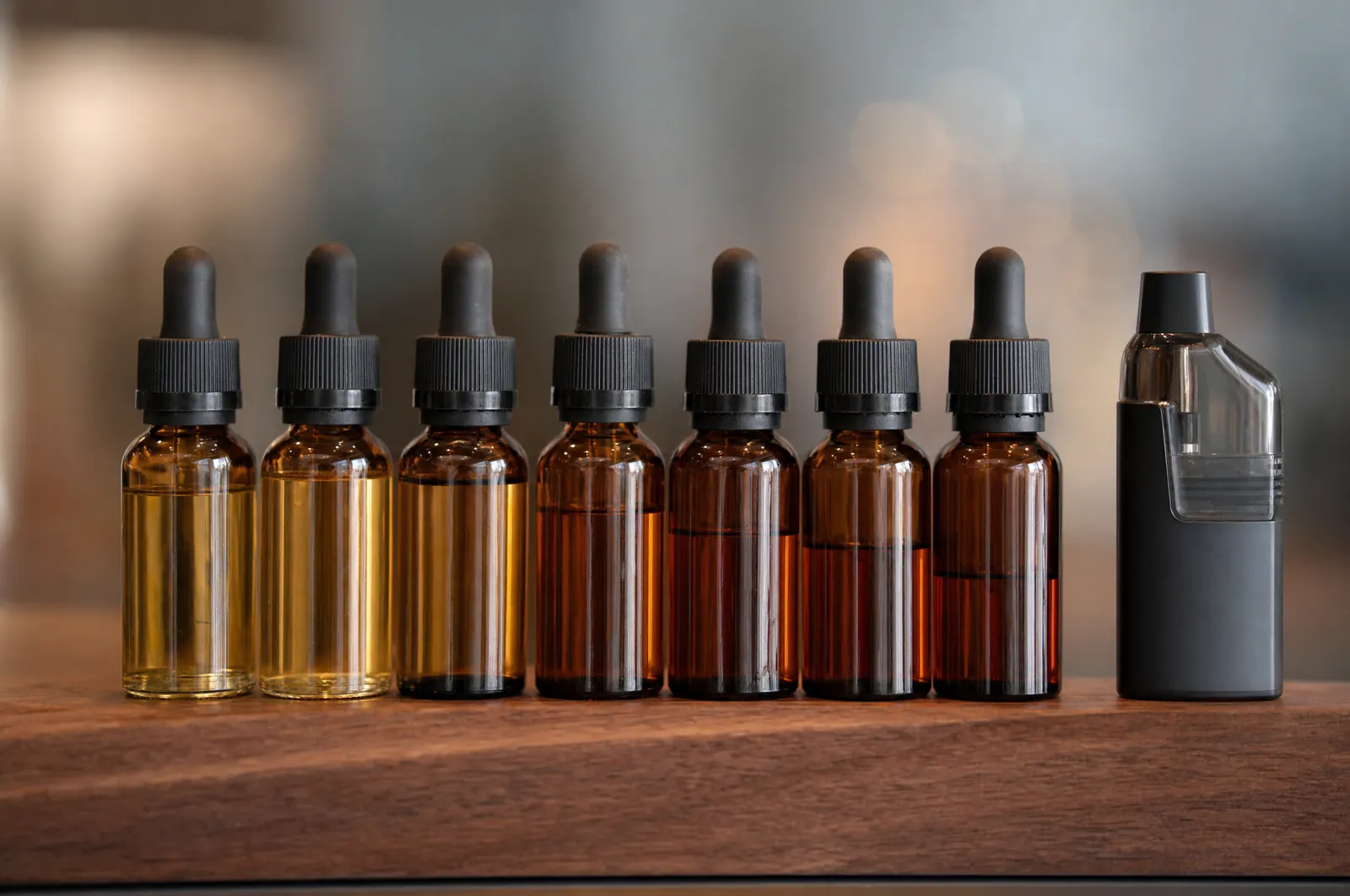
Heisenberg e-liquid appears on British shelves in several formats, and each one implies a different amount of arithmetic. The 10 ml bottle arrives already at its final strength, within the regulatory limits, so there is nothing to calculate at all.
The large formats change the picture completely. Sold as 50 ml and 100 ml shortfills, they arrive at 0 mg in a deliberately oversized bottle: 50 ml in a 60 ml bottle, 100 ml in a 120 ml bottle. That headspace is sized for one shot and two shots respectively.
The shortfill versions are typically a 70/30 VG/PG blend, which is why retailers describe them as suited to sub ohm tanks rather than tight low power pods. That ratio also matters when you choose which shots to pour in.
There is also a concentrate, to be diluted into a base yourself. That format leaves the strength entirely dependent on the base and the shots rather than on the bottle you bought. It is the freest case and the one that demands the most care with the numbers.
What a nicotine shot really does to the flavour
A shot is not neutral in volume, and that is the first thing people underestimate. Each 10 ml bottle added to a shortfill increases the total liquid without adding a drop of flavouring, so the flavour concentration falls in proportion.
Take a 50 ml. Add one shot and you have 60 ml, meaning the flavouring originally measured for 50 ml now occupies a sixth more volume, a drop in intensity of roughly seventeen per cent. On a 100 ml taken to 120 ml with two shots, the same drop applies.
This dilution is anticipated rather than accidental: shortfills are formulated with that headroom in mind. But the compensation is never exact, and the further you go past the intended shot count, the further the result drifts from what the 10 ml bottle tastes like.
A second effect is chemical rather than arithmetic. Nicotine carries a character of its own, slightly peppery and astringent, and it adds sensation at the back of the throat. On an already sharp recipe, that does not simply add, it layers onto something that was there already.
Why Heisenberg e-liquid does not dilute like a dessert
This is the point almost no product page covers, and it is central to this particular liquid. Menthol coolness acts on cold receptors rather than on taste in the strict sense, so it registers even at low concentration and survives dilution well.
The consequence is direct. Pour heavily into a cold fruit shortfill and the fruit fades faster than the cold does. The berry side thins out, the menthol stays put, and the balance tips towards something more mentholated than the maker intended.
A dessert recipe behaves the opposite way. Vanilla, creamy and bakery notes are pure taste flavourings with no sensory reinforcement, so they all dilute at the same rate. The recipe gets quieter overall while keeping its internal proportions intact.
Translated into practice: on a cold recipe, every extra shot moves the profile as well as the number. On a dessert, it only turns the volume down. The same operation does not have the same consequence, and Heisenberg sits firmly in the first category.
Add the throat sensation to that. Strong menthol and a high figure both produce a marked sensation, and they compound. If a mixed bottle turns uncomfortable, our page on a harsh throat hit sets out the levers, dilution included.
Setting the calculation up, volume by volume
Now the numbers. A British freebase shot is 10 ml at 18 mg/ml, so 180 mg a bottle, while a nic salt shot is usually 20 mg/ml, so 200 mg. Two formulas cover everything, and neither depends on the recipe in the bottle.
To find the figure a mix produces, divide total nicotine by total volume. On a 50 ml with one 18 mg/ml shot, that is 180 divided by 60. On a 100 ml with two of them, 360 divided by 120. Both land in the same place, which is why the bottles are sized the way they are.
To go the other way and start from a target, use the formula set out in our guide on how many nicotine shots a bottle needs. The answer rarely comes out as a whole number, and that is normal rather than a sign you have gone wrong.
Two habits prevent most errors. Never calculate on the starting volume, always on the final one with the shots included. And always read the concentration on your own shots, because 18 and 20 are both on the shelf and they are not interchangeable.
Then leave it alone. Shake the bottle, then give it a few days before judging anything. A cold recipe assessed immediately after mixing often reads unbalanced when it would have settled. The whole pouring procedure is covered in our nicotine shot guide.
Handling concentrated nicotine safely
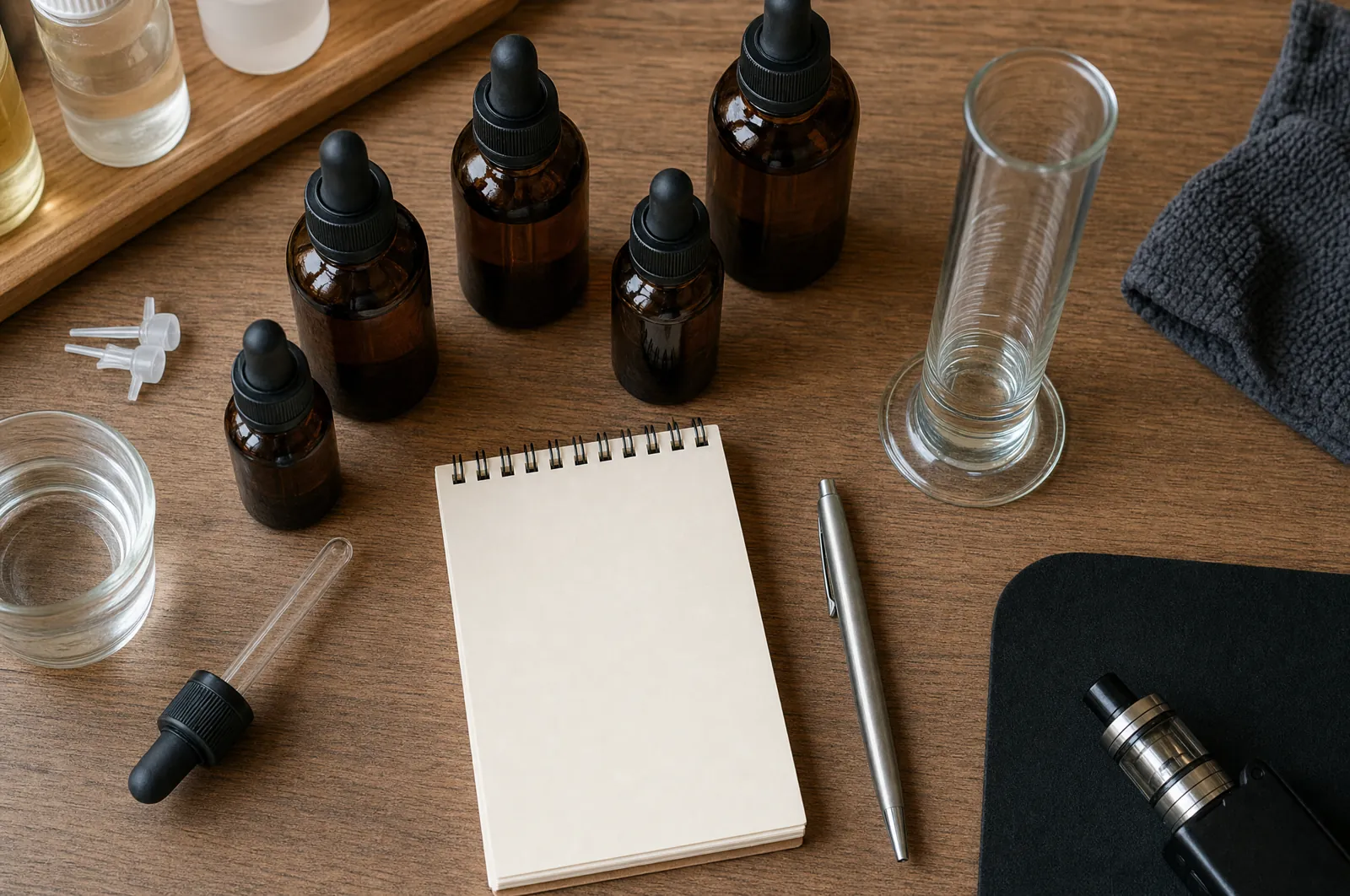
Concentrated nicotine is not an ordinary household liquid. Wear gloves to pour, work on a clear surface, and wipe any splash off skin straight away. A funnel or a graduated syringe cuts the risk of overflow considerably.
Store the bottles out of reach of children and animals, with the child resistant cap properly closed. A shot left on a worktop is the most ordinary domestic accident in this whole subject, and the most easily avoided.
Keep them as you would a finished bottle: away from light, dry, at a stable room temperature. Nicotine oxidises in air and light, which darkens the liquid and dulls the taste before you have got anywhere near vaping it.
Frequently asked questions
Is the exact composition public?
No. Vampire Vape presents the recipe as secret and does not publish the detail. The descriptions found at retailers are converging tasting impressions around berries and menthol, not an official ingredient list.
How many shots for a large nicotine free bottle?
It depends on the figure you are working towards, never on a standard number. Apply the formula to the final volume with the shots included, and check the concentration printed on your own bottles before pouring anything.
Does the taste change after adding shots?
Yes, always. Each shot adds volume without adding flavouring, which dilutes the recipe. Nicotine also brings its own astringency and throat sensation, which shifts the overall impression further.
Should I wait before vaping a mixed bottle?
A few days of standing after shaking helps the flavouring and the nicotine settle together. Judging a mix straight after pouring gives a misleading impression, particularly on very cold profiles.
Can a concentrate be mixed like a shortfill?
No, the logic is different. A concentrate is diluted into a nicotine free base at a percentage specific to the flavouring, and it is that complete mixture that then serves as the volume you calculate shots against.
What to take away
Heisenberg e-liquid belongs to that family of cold recipes where mixing is not purely an arithmetic operation. Adding shots changes the figure, but it also moves the balance between the fruit and the menthol in a way a dessert recipe simply does not experience.
The method comes down to three things. Identify exactly which format you are holding, since a 10 ml and a 120 ml bottle are different problems. Set the calculation on the final volume rather than the starting one. And let the bottle rest before drawing any conclusion about the taste.
The figure itself depends on your hardware far more than on the recipe, as our page on nicotine strength explains, and nothing here presents any particular number as one to aim at. Mixed methodically rather than by eye, a large format Heisenberg e-liquid stays close to what the small bottle tastes like. That is the whole point of doing the sums.
Editorial content for adult readers only. Nicotine is a highly addictive substance. Not for sale to under-18s in the United Kingdom. This article is not a buying recommendation.