How many nicotine shots: the exact calculation
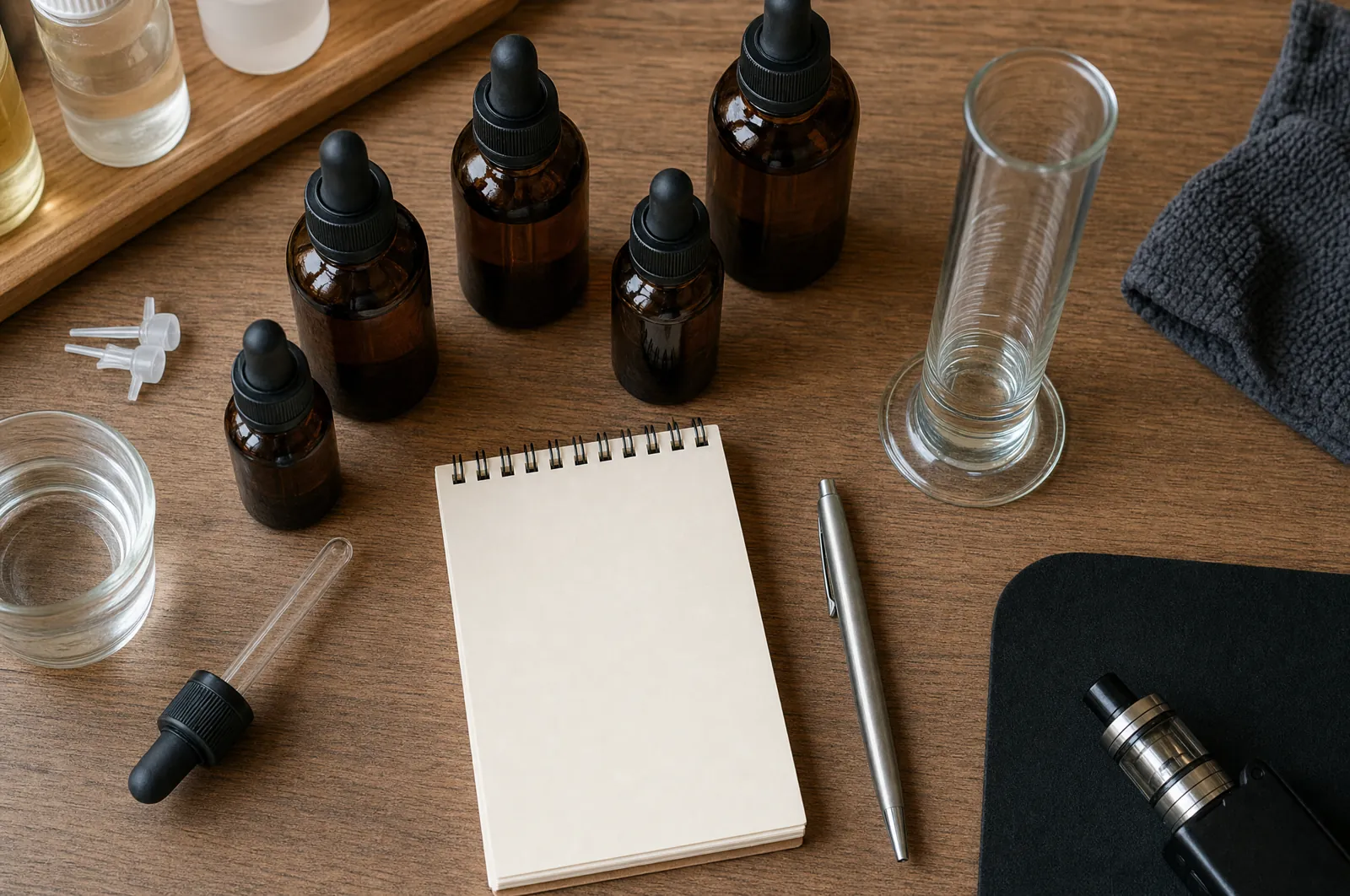
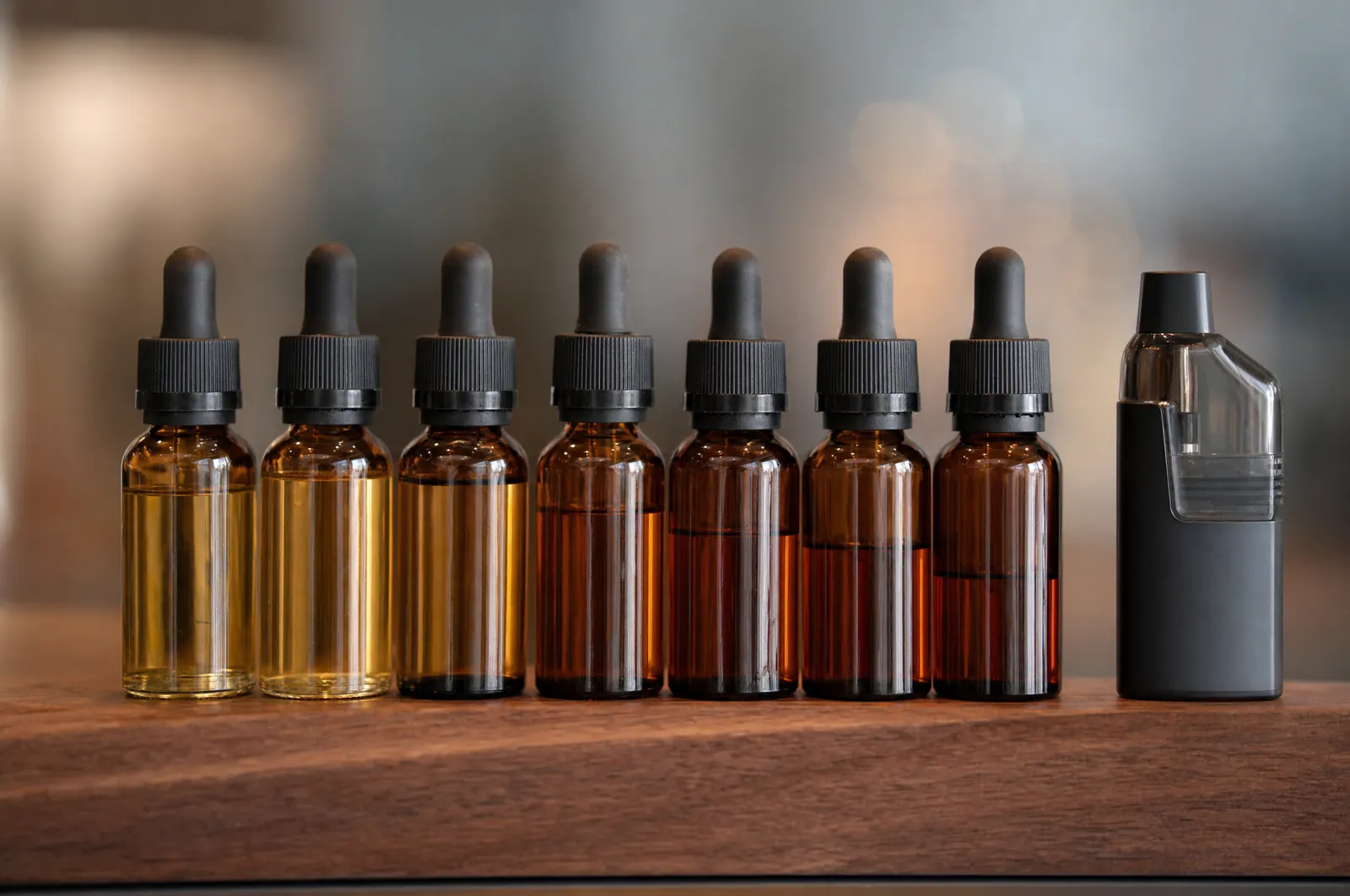
A 100 ml shortfill on the worktop, a couple of 10 ml bottles beside it, and the same question every time: how many nicotine shots go in to land on the figure you actually want? Pour too few and the liquid sits below your target. Pour too many and you cannot take it back out. The answer is not something you eyeball, it is a division, and one formula plus two small tables is enough to stop getting it wrong for good.
How many nicotine shots a shortfill really needs
The number depends on three values and nothing else: the volume of nicotine free liquid you are starting with, the concentration printed on your shots, and the strength you are aiming at. Everything else is noise.
With the British standard of a 10 ml shot at 18 mg/ml, each bottle carries 180 mg of nicotine and adds 10 ml of volume. With a nic salt shot at 20 mg/ml, the same bottle carries 200 mg. The number of shots follows from: shots = (target strength x base volume) / (shot nicotine content minus 10 x target strength).
Working out how many nicotine shots to pour is therefore a single division, not a matter of judgement. The one thing that trips it up is assuming a figure for the shot instead of reading it off the bottle in your hand.
The formula explained step by step
Behind the equation sits a very plain idea. An e-liquid is a quantity of nicotine spread through a quantity of liquid, and the strength is simply one divided by the other.
Written out, that reads: strength in mg/ml equals total nicotine in mg divided by total volume in ml. Every shot you add changes both halves of that fraction at once, which is the part people forget. It adds nicotine, and it also adds volume that dilutes it.
Take the standard British case. A 50 ml shortfill plus one 18 mg/ml shot gives 180 mg spread through 60 ml, which is 3 mg/ml. That single line explains why 50 ml shortfills are sold in 60 ml bottles: the headspace is sized for exactly one shot.
The formula does no more than run that reasoning backwards, starting from the strength you want and returning the number of bottles. Nothing in it presents any particular result as advisable, it simply tells you what a given pour produces.
Table for a 50 ml shortfill
The 50 ml format is the most common on British shelves. Here is what it produces with standard 10 ml shots at 18 mg/ml.
| Shots added | Final volume | Resulting strength |
|---|---|---|
| 1 shot | 60 ml | 3.0 mg/ml |
| 2 shots | 70 ml | 5.1 mg/ml |
| 3 shots | 80 ml | 6.8 mg/ml |
Note that a 60 ml bottle only physically holds one shot. Going beyond that means decanting some of the base first, which is a real constraint rather than a theoretical one and it catches people out constantly.
The same table with 20 mg/ml nic salt shots reads slightly differently: one shot gives 200 mg in 60 ml, so 3.3 mg/ml. Same gesture, different number, purely because the label said 20 rather than 18.
Table for a 100 ml shortfill
The 100 ml format arrives in a 120 ml bottle, with headspace for two shots. That is the second British standard and it behaves the same way.
| Shots added | Final volume | Resulting strength |
|---|---|---|
| 1 shot | 110 ml | 1.6 mg/ml |
| 2 shots | 120 ml | 3.0 mg/ml |
Both tables show the same underlying reality, and it is the one most often misread. Adding shots raises the nicotine, but it also raises the volume, so the strength climbs more slowly than the bottle count suggests. Doubling the shots never doubles the figure.
That is also why the bottle sizes are what they are. A 50 ml in 60 ml and a 100 ml in 120 ml both land on 3 mg/ml with 18 mg shots, which is simply where the arithmetic falls, not a target anyone is setting for you.
Adapting the calculation to other volumes
Neither table is a law. The same reasoning covers any format at all, as long as you keep the formula in view rather than reaching for a remembered number.
Say you have a 200 ml base and you are aiming at 3 mg/ml with 18 mg shots. The formula gives (3 x 200) / (180 minus 30), which is 600 divided by 150, so 4 shots exactly. Change the target to 4 mg/ml and it becomes 800 divided by 140, roughly 5.7 shots.
In practice you round to a whole bottle and accept a small gap, which is precisely why real strengths rarely land on tidy numbers. A graduated syringe lets you pour part of a bottle if you want to close that gap, and it is the same tool that makes handling safer.
How many nicotine shots: the concentration trap
One detail invalidates every calculation above if you ignore it, and it is the single most common error in British mixing. The formula assumes you know what is in your shots.
Two standards genuinely coexist on the shelf. Freebase shots are typically 18 mg/ml, which is 180 mg a bottle. Nic salt shots are typically 20 mg/ml, which is 200 mg. Suppliers such as Vapable list both, and nothing on the outside of the box distinguishes them at a glance.
Before counting how many nicotine shots to pour, read the concentration on the label every single time. Substitute the real nicotine content of your bottle, concentration multiplied by volume, into the formula and it stays correct whatever you are holding. Mixing two different concentrations into the same shortfill without recalculating makes the result genuinely unpredictable.
Our guide to using a nicotine shot covers the pouring itself, the carrier ratio and the handling precautions that go with concentrated nicotine.
The reflex that keeps it right
Counting shots comes down to one division set up properly: the nicotine the bottles bring in, divided by the total volume once they are in. Everything else follows from that.
Two habits cover almost every mistake. Never calculate on the starting volume, always on the final one with the shots included. And never assume a shot concentration, read it. Those two alone remove the great majority of the errors people report.
If the result feels harsher than expected once mixed, the strength is only one of several factors at play, and our page on a harsh throat hit goes through the others.
Frequently asked questions
How many shots for 3 mg/ml in a 100 ml shortfill?
Two 18 mg/ml shots give 360 mg across 120 ml, which is exactly 3 mg/ml, and the 120 ml bottle is sized for precisely that. With 20 mg/ml salt shots the same pour gives 400 mg across 120 ml, so 3.3 mg/ml.
What do I do when the answer is not a whole number?
Round to the nearest bottle and accept a small difference, or pour part of a shot with a graduated syringe if you want to land closer. There is no way to remove nicotine once it is in, so err towards the lower bottle count.
Does the PG/VG ratio change the number of shots?
No. The nicotine calculation depends only on millilitres and milligrams. The carrier in the shot does shift the final PG/VG ratio of your bottle, but it has no effect at all on the strength.
Can I go above 20 mg/ml by adding lots of shots?
Not from a nicotine free base. Each bottle adds as much volume as it does nicotine, so the figure approaches the shot concentration without reaching it. The 20 mg/ml ceiling is a regulatory fact about what may be sold, not a level anyone is aiming at.
Do I need to recalculate if I change base volume?
Yes, the volume is a variable in the formula. Doubling the base without doubling the shots halves the result. Run the division again the moment the volume changes.
Getting the count right every time
Knowing how many nicotine shots a bottle needs is a single arithmetic habit rather than a piece of knowledge to memorise. The formula covers the standard case, the two tables settle the common British volumes, and a glance at the label catches the error that undoes everything else.
Set against the final volume rather than the starting one, and read off your own bottles rather than a remembered standard, the calculation lands where you intended it to. That is all there is to it, and it is why nothing here needs to tell you what to aim for.
Work out how many nicotine shots your own format calls for and the shortfill stops being a guessing game. The rest of the dosing section applies it to the situations this page leaves open.
Editorial content for adult readers only. Nicotine is a highly addictive substance. Not for sale to under-18s in the United Kingdom. This article is not a buying recommendation.